Top 5 Videos on Box Puzzle Reasoning for Bank Exams by PW
Prepare Box Puzzle Reasoning for bank exams with five PW videos covering vertical arrangements, gaps, position clues, negative conditions and case-based questions. Learn to connect clues, draw diagrams, eliminate incorrect cases and check answers through step-by-step examples and exam-level practice.

Clicking will open your Google Search settings to set PW as a preferred source

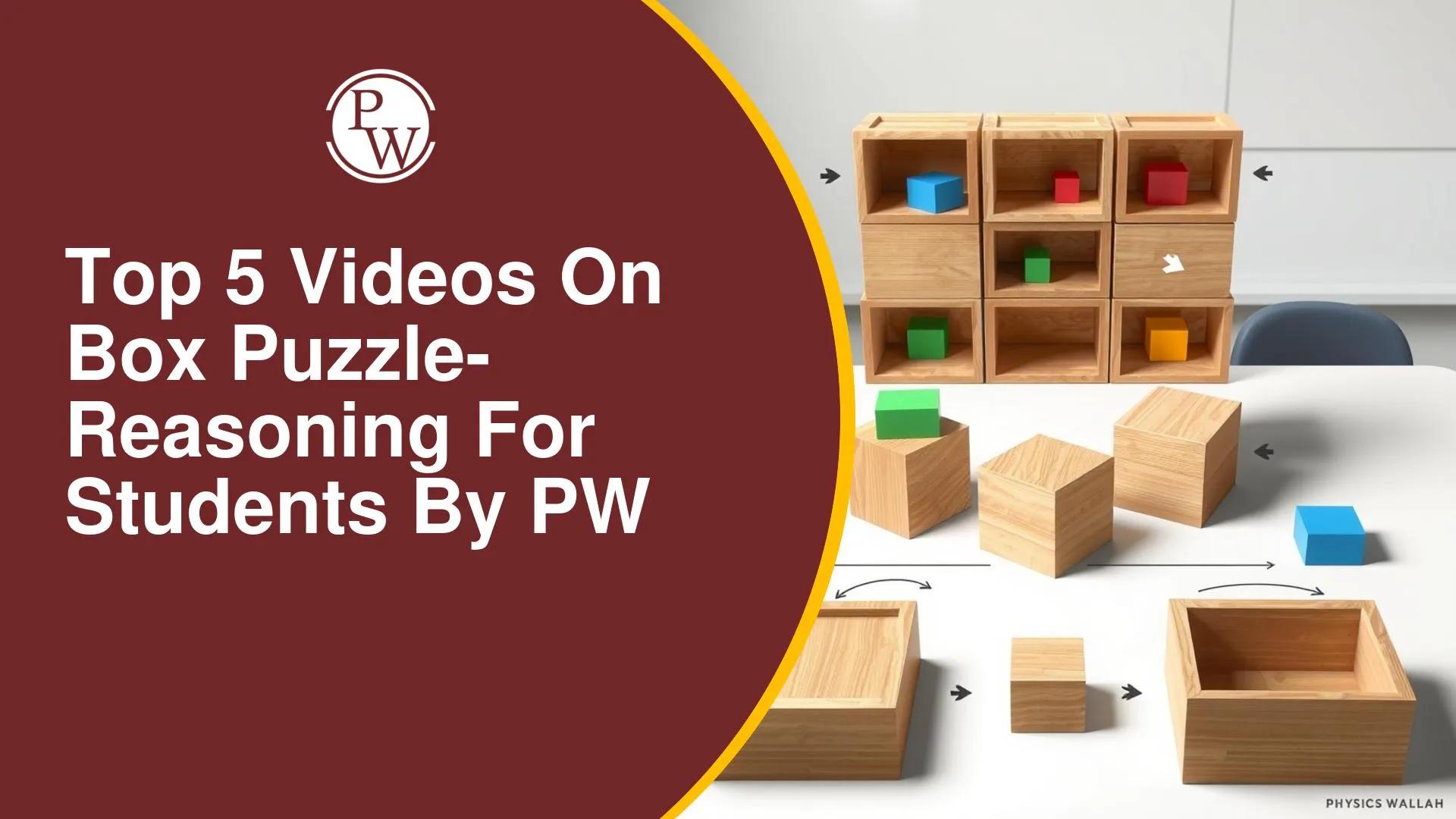
Box Puzzle questions can take time to solve when several conditions affect the position of each box. You may understand clues such as above, below, immediate and between, but combining them into one correct arrangement can still be confusing. Creating too many cases or missing a negative condition can also lead to incorrect answers.
PW videos help you understand Box Puzzle through solved examples, vertical arrangements and step-by-step methods. You can learn how to read clues, draw position diagrams, build possible cases and check your answers. These lessons also support your preparation for the Reasoning Ability section of banking examinations.
Video 1: Master Box Puzzle in One Shot with PYQs and Multiple Cases
This one-shot video covers eight- and nine-box arrangements through different types of position clues. You practise placing boxes vertically and solving questions based on gaps, immediate above or below positions, distance from the top, topmost and bottom positions, equal spacing and between conditions. The examples also include odd-one-out questions, linked clues and possible cases. Use this video to revise the main Box Puzzle rules in one sitting and understand how to connect conditions, remove incorrect arrangements and check the final answer.
Video 2: Learn Vertical Box Arrangements with Step-by-Step Solving Tricks
This video focuses on Box Based Puzzle questions where boxes are placed in a single vertical stack. You work with clues about boxes above or below one another, gaps, adjacent positions, immediate placement, fixed distances and equal numbers on either side. The solved examples show how to begin with a clear clue, make possible arrangements, connect the remaining conditions and reject incorrect cases. Watch this video after learning the basic rules to improve your diagram-making, clue reading and answer accuracy.
Want to strengthen your Reasoning preparation for bank exams? Visit PW Banking to find exam-related learning resources and continue practising important reasoning topics.
Video 3: Build Prelims-Level Accuracy with Solved Box Puzzle Questions
This video takes you through single-column Box Puzzle questions at the prelims level. You practise direct, relative, above, below, between, immediate and negative conditions using seven- and eight-box arrangements. The examples show how to draw diagrams, create separate cases when a clue does not fix a position and remove arrangements that do not match all the conditions. If you know the basic rules but need more question practice, use this video to improve your ability to read clues carefully, check options and solve without guesswork.
You can also review the SBI PO Prelims Exam Analysis 2026 to understand the reasoning question types reported in the examination.
Video 4: Solve Advanced Box and Floor Arrangements with Mixed Conditions
This video moves from simple Box Puzzle questions to harder arrangements that combine box positions with floor-based clues. You practise conditions such as above, below, just above, just below, distance and order, along with questions involving eight or more boxes, colours and floors. The examples show how to note the given information, avoid unnecessary entries, form possible cases and check each condition before choosing an answer. Use this lesson when basic puzzles feel manageable, and you want to practise mixed arrangements with greater care.
Preparing for SBI, IBPS or other banking examinations? Explore the PW Banking Exams page for exam updates, preparation resources and practice support.
Video 5: Revise Seven to Nine Box Arrangements with Detailed Examples
This video covers a wider range of Box Puzzle conditions through seven-, eight- and nine-box arrangements. You practise direct and relative clues, immediate positions, fixed gaps, between conditions, negative rules, adjacency and middle, top or bottom positions. The examples also include prime-numbered positions and at least or at most conditions. You learn to use position diagrams, connect repeated clues, create possible cases and compare the options before confirming an answer. Choose this video when you need detailed revision before attempting timed reasoning questions.
For more question-based preparation, attempt the important reasoning questions for Bank Exams 2026.
Box Puzzle Reasoning becomes easier with regular practice and a clear approach to arranging clues. These five PW videos cover basic and advanced arrangements, case building, negative conditions and solved questions. Practise each method, revise important clues and solve questions under timed conditions to improve your accuracy and confidence in bank exam reasoning.